Introduction
The climbing obesity rates in the United States and the resultant obesity epidemic were first identified among the adult population in the 1970s. Since then, the incidence of obesity has steadily risen, with over 72 million adults in the United States affected by the disease, according to recent studies.1 However, the rise in pediatric obesity in the last 30 years is newer and equally concerning.2 It is a risk factor for diseases such as early-onset diabetes mellitus type 2 (DM2) and children with obesity are also more prone to significant problems with mental health and self-esteem. It is also a risk factor for Non-alcoholic fatty liver disease (NAFLD), non-alcoholic steatohepatitis (NASH), hypertension, and obstructive sleep apnea. More children in the U.S. are suffering from being overweight and obese,3 with these same children have a higher chance of becoming obese adults.4 It has become clear that preventing pediatric obesity will also be an important part of improving the quality of life of the U.S. population.4
Obesity is connected to several leading causes of preventable deaths in the U.S., making the need for understanding and finding solutions to the multifactorial causes of obesity significant to ensure it does not soon outpace smoking as the leading cause of preventable premature death. One of the challenges of obesity prevention stems from its complex causes, ranging from biological and psychological causes to socioeconomic and geographical factors and beyond.5
The distribution of these afflicted communities is neither linear nor static. However, people living in rural areas were found to have higher occurrences of obesity.6 These individuals, especially those living in a rural area of low socioeconomic status, are especially vulnerable. Various social determinants of health often afflict these areas, some of the most prominent being a lack of access and transportation to healthcare, a lack of affordable healthy food options, and low health literacy. These challenges make obesity prevention even more challenging because they often lead to the main causes of both pediatric and adult obesity.6
Calorie intake exceeding caloric expenditure is one of the leading causes of obesity.3 High-calorie, sugar-sweetened drinks are especially related to both pediatric and adult obesity. In addition, the sedentary lifestyle promoted by the dawn of the new technological age is another large contributor to the increasing rates of obesity.7 However, while it is easy to assign blame to these behaviors, one cannot ignore the environmental and psychological factors that also play a role. Fresh produce, which is incredibly important for a healthy diet, is often too expensive for low-income families to afford. This can lead to cheaper food options such as frozen meals and fast food as affordable alternatives. In addition, personal conflicts such as mental health problems and stigmatization have been seen to correlate with obesity rates, especially in adult populations.8 Such complexities have made finding effective prevention and education measures difficult despite past and current efforts. Weight loss programs, drugs for weight loss, and bariatric surgery are among a few of the methods by which public health and healthcare workers are attempting to mitigate the obesity epidemic.9 However, with the varying or even low success of some of these programs and the financial and safety burdens implicated in using pharmacological or surgical options, the goal of finding and implementing programs or medical options to enhance long-term weight loss success is still an ongoing challenge.9
Epidemiology
As per WHO, since 1990, obesity in adults has doubled, and obesity in adolescents has increased by four times. In 2022, one in eight people in the world was living with obesity. . 2.5 billion adults are overweight (43% of adults), including 890 million with obesity (16% of adults). 37 million children under the age of five, over 400 million children and adolescents aged five-nineteen years were overweight, and 170 million were living with obesity.10
According to the CDC, during August 2021–August 2023, the prevalence of obesity in the US was 40.3%, in adults, approximately the same in males and females. For age-specific data, prevalence was higher in the age group of 40–59 than in ages 20–39 and 60 and older. The prevalence of obesity was lower in adults with higher education levels. The prevalence of severe obesity in adults was 9.4% and was higher in females than males for each age group. From 2013–2014 through August 2021–August 2023, the age-adjusted prevalence of obesity did not change significantly, while severe obesity prevalence increased from 7.7% to 9.7%.11 Approximately 1 in 5 U.S. children and adolescents have obesity. Obesity affects some groups more than others, including adolescents, Hispanic and non-Hispanic Black children, and children in families with lower incomes. Health care for obesity is expensive for patients and the health care system. Between 2017-2020, 19.7% children and adolescents in the US were found to have obesity. Predictions estimate that by 2030, nearly half of the U.S. adult population will become obese, significantly, including severe obesity.12
Obesity is a serious and common chronic disease affecting some groups more than others, including, non-Hispanic Black adults and adults with less education.13 To determine whether an individual is obese, body mass index (BMI) is a quick and reliable measure. For adults, the following formula and ranges have been established.13 [BMI = weight(kg) / Height (m)2].13
For adults, BMI categories are underweight, healthy weight, overweight, and obesity which is further classified into three categories. The following values are referenced for adults age 20 and older.14 For children and teens who are growing, BMI is compared to other children and teens of the same sex and age. This is accomplished using BMI for age percentiles or growth charts. Percentiles are used to rank an individual by indicating what percent of the reference population the individual equals or exceeds and are the best indicator to evaluate growth patterns in children.13 Please refer to table 1 for BMI classifications of adults and Children.13
Etiology of Pediatric and Adult Obesity
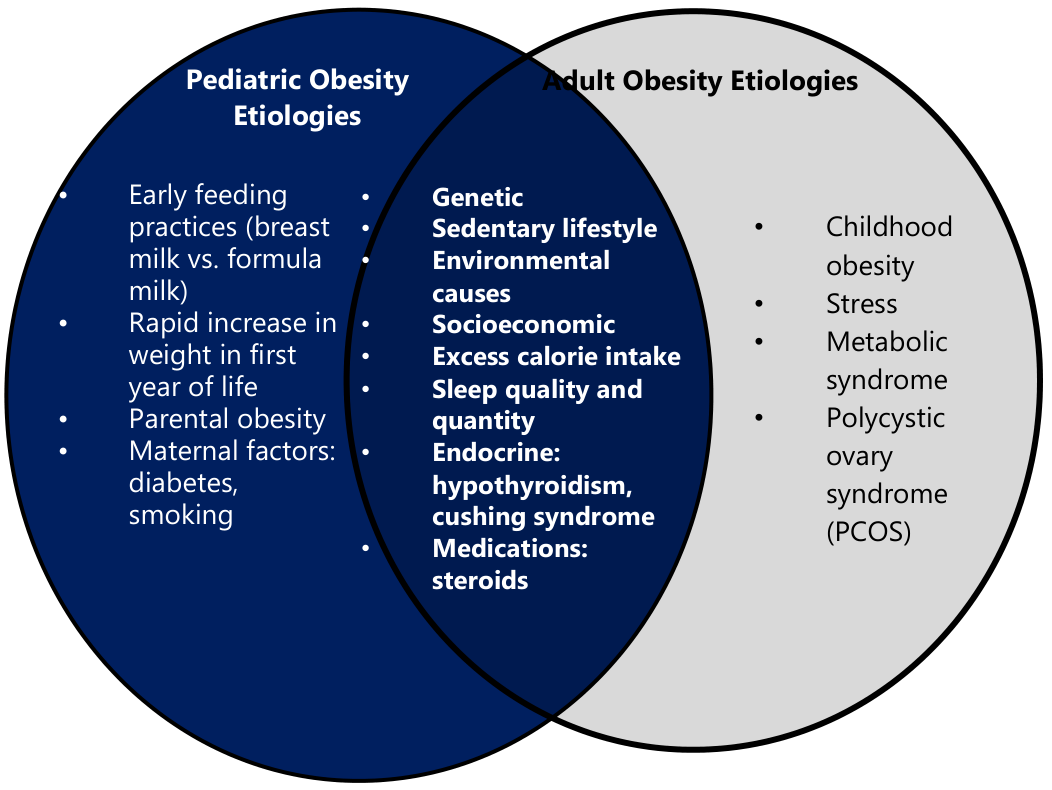
Obesity is a multifactorial condition that is greatly affected by environmental and social factors, as well as some genetic predispositions. Specific genes, such as leptin, pro-opiomelanocortin, and melanocortin 4 receptor genes, have all been linked to obesity.15 Although their occurrence is rare, the resulting association with obesity of the mutations within these genes has been key to better understanding obesity’s pathogenesis.16
Studies have shown that a very prominent etiology for pediatric and adult obesity is related to environmental components.16 Sedentary lifestyles and dietary intake both profoundly impact the risks of obesity. Children who have one or both parents who are overweight in the house have a much higher chance of developing obesity. And consequently, overweight children are far more likely to become overweight adults.17
There are also risks associated with developing obesity depending on the nutritional and lifestyle environments pregnant women and children experience at specific times. Epigenetic changes play the role of intergenerational transmission of obesity along with genetic factors. Exposure to factors in the environment makes children susceptible to obesity even without inheriting genetic factors.17 Please refer to Figure 1 for causes of obesity in the pediatric and adult population.15-17
Pathophysiology
The pathophysiology of obesity is related to energy expenditure in calories being less than the amount of energy intake.18 Fat, also called adipose tissue, is our main energy storage source. White fat, the main component of adipose tissue, plays a major role in storage of energy and physiology. The triglycerides stored in this white fat store the body’s available energy and are broken down and circulated throughout the body as free fatty acids during fasting or starvation.18
As an endocrine organ, adipose tissue also plays essential roles in energy balance and reproduction within organisms.19 It is stored most prominently in the cephalad regions of the trunk for men and caudal regions of the trunk and subcutaneously for women. Increased weight eventually leads to the hypertrophy of the adipose tissue.20 This change in their structure leads to changes and effects in their supporting tissue and blood supply, resulting in further complications as weight gain continues.20
Specific to energy storage is a hormone called leptin, secreted by adipose tissue. Leptin is secreted in specific amounts to help maintain ideal energy balance within organisms.20 Increased body weight increases plasma leptin concentrations, often leading to a negative energy imbalance and can perpetuate weight gain. The rate at which leptin is produced is proportional to the amount of adipose tissue in the body, and its role in increasing hunger signaling in the brain can lead to increased appetite. Past studies have shown that disruption in the central and peripheral hunger pathways, of which leptin plays a key role, leads to leptin resistance.21 This result aligns with the findings that a majority of those with obesity are leptin resistant, making endogenous and exogenous forms of the hormone no longer effective.22 This resistance to leptin and its concentration in plasma play a role in adipocyte production and, causatively, weight gain.21,22 Leptin plays an important role in monogenic obesity, especially in congenital leptin deficiency.21
The central and peripheral pathways that control hunger and, consequently, play a role in energy intake, expenditure, and weight loss play significant roles in obesity. Within the arcuate nucleus of the hypothalamus, pathways and signals regulating hunger and energy homeostasis are integrated and regulated. Two pathways, the agouti-related peptide (AgRP)/neuropeptide Y (NPY)-expressing neurons and the pro-opiomelanocortin (POMC)/cocaine-and amphetamine-regulated transcript (CART)-expressing neurons play essential and opposite roles in regulating energy intake.22 The AgRP/NPY pathway is orexigenic, which promotes hunger and food consumption while down-regulating energy expenditure during periods of low energy intake. The hormones insulin and leptin, which facilitate glucose uptake into cells and send “hunger signals” to the brain, respectively, play a large part in regulating this pathway.22
The POMC/CART pathway performs the opposite function. As an anorexigenic signaling pathway, it promotes energy expenditure and encourages decreased food consumption.23 These neurons are stimulated by leptin to release a neuropeptide called alpha-melanocyte-stimulating hormone (α-MSH), which leads to decreased food consumption. Opposite to the AgRP/NPY pathway, the POMC/CART pathway is inhibited during low energy, so its appetite-suppressing actions are inhibited, and greater energy uptake is promoted. The AgRP/NPY pathway is also inhibited by activating 1B receptors for the neurotransmitter serotonin 5-hydroxytryptamine (5-HT).22 A decrease in the signaling for 5-HT is highly correlated with increased appetite and weight gain, while increased signaling for 5-HT has the opposite effect. Norepinephrine (NE) is another neurotransmitter that could potentially affect hunger and weight gain. It increases food uptake via the stimulation of the dorsal pathway and inhibits food uptake by activating the ventral pathway in the hypothalamus.24 Please refer to Figure 2 below for a diagram of the effects of the POMC/CART and AgRP/NPY pathways on food intake.22-24
However, integration and signaling in the hypothalamus are not the only locations where obesity-related hormones are made. Hormones secreted in the gastrointestinal system play a role in the peripheral pathway of hunger and energy regulation.22 Intestinal hormones glucagon-like peptide-1 (GLP-1), cholecystokinin (CCK), and peptide YY (PYY) are secreted when there is food intake and play an anorexigenic role by promoting satiety. Ghrelin, a hormone secreted by the stomach, is the single known orexigenic hormone, also called the hunger hormone, and it promotes increased appetite and energy consumption. Low levels of this hormone during fasting have an inverse correlation with BMI, and it has been seen that altered suppression of this hormone has been correlated to obesity. These central and peripheral pathways play a role in energy homeostasis and, as a result, play a key role in obesity.22
Complications
People who are overweight or obese have an increased risk for many severe diseases, including early death, hypertension, elevated low-density lipoprotein (LDL) cholesterol, reduced high-density lipoprotein (HDL) cholesterol, and elevated triglyceride levels, type 2 diabetes, coronary heart disease, stroke, gallbladder disease, osteoarthritis, sleep apnea and breathing problems, many types of cancers, lower quality of life, mental illness, and body pain.25
According to the WHO, being overweight in childhood and adolescence affects immediate health and increases risk and earlier onset of non-communicable diseases in them. Childhood and adolescent obesity also have adverse psychosocial consequences. It affects school performance and quality of life, compounded by stigma, discrimination and bullying.26
There are additional findings in pediatric patients who are obese. Obese adolescents have advanced puberty with advanced menarche, although this advance is not so constant in males. Boys with obesity frequently present with gynecomastia and it also increases risk of pediatric obstructive sleep apnea (OSA).27 Psychosocial problems develop as a result of weight-based stigma. One aspect of stigma is poor integration of the network of friends in a social environment, which initially leads to passive marginalization due to diminished attractiveness as a friend.27 Similar to weight-based stigma, bullying occurs in boys or girls who are obese, specifically in places where no preventative measures are in place.26 Another common finding is low self-esteem consisting of an emotional self-evaluation of one’s worth - it contributes to a certain state of happiness or unhappiness.26 Please refer to Table 2 for summary of complications of obesity.10,25,26
Discussion
Prevention
Despite a lack of standardized or structured obesity prevention, some promise has been seen with targeted prevention.39 A two-year study done in Finland found that their intervention program on 13-15 year old patients resulted in promising improvement in known comorbidities of obesity, such as improved food consumption habits and decreased cholesterol. However, there was no significant decrease in obesity itself. Even without this decrease, the results of this study indicate that this intervention strategy could be potentially effective.
Based on these results and experience from individual patient cases, it is recommended that obesity prevention initiatives should be focused on the following: (1) early prevention strategies in the pediatric population, (2) increased education of patients and guardians about the comorbidity risks that come with pediatric and adult obesity, and a (3) stepwise, tailored prevention and management of obesity plans for patients.40 To implement all preventive and management strategies effectively, it is recommended to use the methods of motivational interviewing (MI). Providers can start the conversation by using the 5As technique, which consists of “Asking” about a specific health-related behavior,” Advising” the patient about the behavior, “Assessing” readiness to change, “Assisting” with goal setting, and “Arranging” follow‐up.39 Four communication skills such as “OARS”, asking open-ended questions, providing affirmations, emphasizing points which the patient had said by reflective listening and putting everything to summarize can help to build the motivation for the change in the patients with obesity. Patients can be encouraged to come up with a SMART goal, which stands for specific, measurable, attainable, result-focused, and timed.41
Figure 2.T The POMC/CART and AgRP/NPY signaling pathways’ Effect on Food Intake 22-24
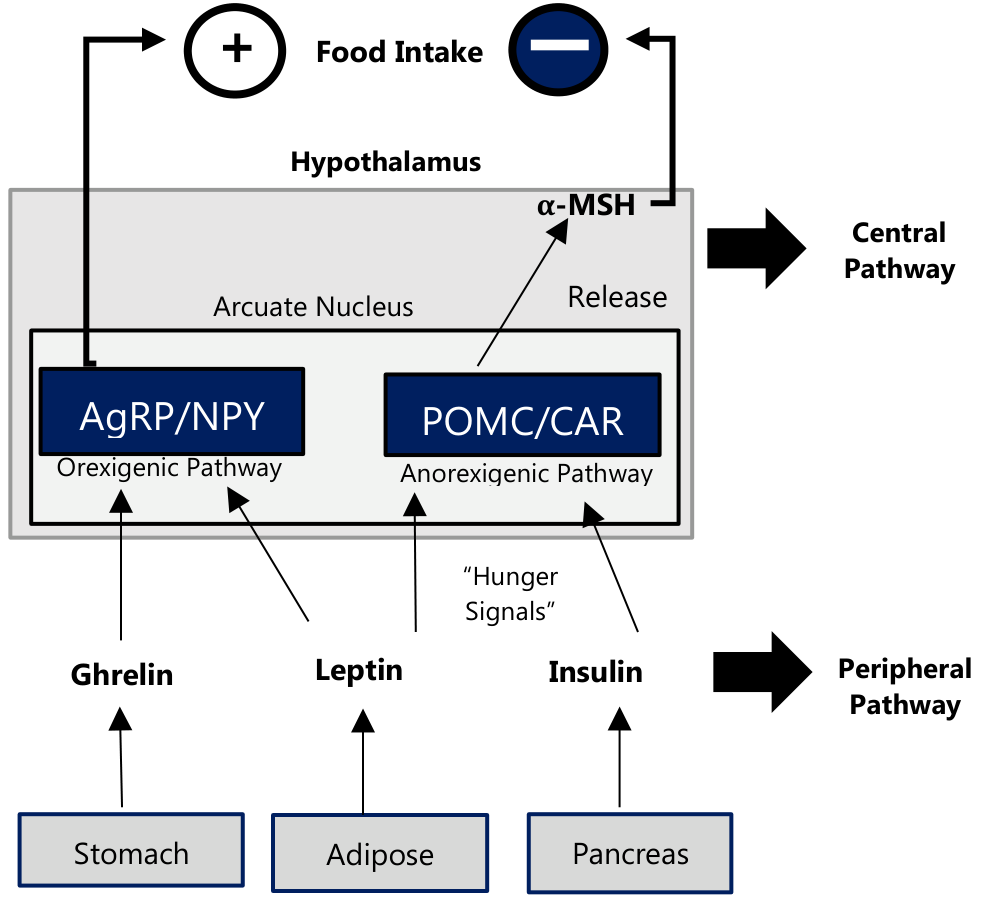
Legend: The agouti-related peptide(AgRP)/neuropeptide Y (NPY)-expressing neurons and the pro-opiomelanocortin (POMC)/cocaine-and amphetamine-regulated transcript (CART)-expressing neurons have opposite roles in regulating energy intake.
More specifically, according to the CDC, there are various ways families can help prevent obesity.42 Healthy eating style adopted by the entire family helps children maintain a healthy weight, beginning with modeling a healthy eating pattern - parents can offer a variety of fruits and vegetables throughout the day, such as frozen and canned fruits and vegetables, as they are often less expensive than fresh and are still a great nutritional source.42
Families can maintain physical activity levels together. Activities such as walking the family pet before and after school, walking to the school and back home from the school, riding a bike, washing vehicles, or raking leaves count as physical activity.4 Lack of sleep is another contributing factor that is usually neglected. Setting a consistent sleep routine to good quality and quantity sleep also helps to prevent type 2 diabetes, injuries, and problems with attention and behavior, along with obesity.42 CDC recommends 14-17 hours of sleep for newborns, 12-16 hours for infants, 11-14 hours for toddlers, 10-13 hours for preschoolers, 9-12 hours for school-going children, 8-10 hours for adolescents, and more than 7 hours for adults.43
Wills-Ibarra et al. 2024 studied Family Systems Theory (FST), which included various factors related to family intervention in obesity management, including interaction, support, and skills of parents and their effects on body mass index, changes in lifestyle, and effects on mental health. The study found improvement in BMI. The review discussed the role of existing FST and provided recommendations for future practice and research.44
In adults, recommendations to prevent obesity include tracking food intake. Eating five to nine servings of fruits and vegetables daily (One vegetable serving includes 1 cup of raw vegetables or ½ cup of cooked vegetables or vegetable juice while one fruit serving includes one small to medium fresh fruit, ½ cup of canned or fresh fruit or fruit juice, or ¼ cup of dried fruit).44 Adults are also recommended to select whole-grain foods (brown rice, whole wheat bread) while avoiding highly processed foods. Additionally, adults are recommended to engage in at least five days of moderate physical activity combined with resistance and strengthening exercises.44 Not only calculating the calories, but also education for reading the nutrition labels and calculating the portion size should be made a part of the prevention plan.45
Future directions:
A multi-faceted approach by an individual, family, and community is needed to combat obesity. Prioritizing healthy and appropriate portion size eating, following a daily routine of physical activity, getting age-recommended sleep hours, managing stress, tension, and seeking professional health care on time should be considered for every patient for the effective management of obesity.46
Conclusion:
Obesity is a chronic disease that afflicts children, teens, and adults alike. Childhood obesity can lead to obesity in adulthood and will increase the risk of developing chronic conditions such as diabetes, hypertension, and heart disease. With the rates of obesity amongst children and adults continuing to climb in rural areas, addressing the causes is paramount. Biological, behavioral, and social factors all contribute to obesity rates in rural areas, often due to the challenges of accessing healthy food and fewer spaces for physical activity. By targeting treatments and interventions at these social determinants of health, we can improve individual health and foster healthier communities. By providing more comprehensive weight-loss plans, we hope to help reverse the current obesity trends in pediatric and adult populations in rural America.
References
1. Bean MK, Stewart K, Olbrisch ME. Obesity in America: implications for clinical and health psychologists. J Clin Psychol Med Settings. 2008;15:214–224.
2. Cali AMG, Caprio S. Obesity in children and adolescents. J Clin Endocrinol Metab. 2008;93(11 Suppl 1):S31-6. doi:10.1210/jc.2008-1363.
3. Xu S, Xue Y. Pediatric obesity: causes, symptoms, prevention and treatment. Exp Ther Med. 2016;11(1):15–20.
4. Davis AM, Bennett KJ, Befort C, Nollen N. Obesity and related health behaviors among urban and rural children in the United States: data from the National Health and Nutrition Examination Survey 2003–2004 and 2005–2006. Journal of pediatric psychology. 2011 Jul 1;36(6):669-76.
5. Yoon PW, Bastian B, Anderson RN, Collins JL, Jaffe HW; Centers for Disease Control and Prevention (CDC). Potentially preventable deaths from the five leading causes of death—United States, 2008–2010. MMWR Morb Mortal Wkly Rep. 2014;63(17):369–374.
6. Cohen SA, Cook SK, Kelley L, Foutz JD, Sando TA. A closer look at rural–urban health disparities: associations between obesity and rurality vary by geospatial and sociodemographic factors. J Rural Health. 2017;33(2):167–179.
7. Rey-López JP, Vicente-Rodríguez G, Biosca M, Moreno LA. Sedentary behaviour and obesity development in children and adolescents. Nutr Metab Cardiovasc Dis. 2008;18(3):242–251.
8. Wellman NS, Friedberg B. Causes and consequences of adult obesity: health, social and economic impacts in the United States. Asia Pac J Clin Nutr. 2002;11(Suppl 7):S705–S709. Available from: https://apjcn.nhri.org.tw/server/APJCN/11/s7/S705.pdf
9. Wadden TA, Brownell KD, Foster GD. Obesity: responding to the global epidemic. J Consult Clin Psychol. 2002;70(3):510–525.
10. World Health Organization. Obesity and overweight [Internet]. Geneva: World Health Organization; n.d. Available from: https://www.who.int/news-room/fact-sheets/detail/obesity-and-overweight .
11. Emmerich SD, Fryar CD, Stierman B, Ogden CL. Obesity and severe obesity prevalence in adults: United States, August 2021–August 2023. NCHS Data Brief. 2024;(508). Hyattsville (MD): National Center for Health Statistics. Available from: https://www.cdc.gov/nchs/products/databriefs/db508.htm
12. Centers for Disease Control and Prevention. Childhood obesity facts [Internet]. Atlanta (GA): CDC; n.d. Available from: https://www.cdc.gov/obesity/childhood-obesity-facts/childhood-obesity-facts.html. [cited 2026 Oct 31].
13. Centers for Disease Control and Prevention. About body mass index (BMI) [Internet]. Atlanta (GA): CDC; n.d. Available from: https://www.cdc.gov/bmi/about/index.html. [cited 2026 Oct 31].
14. Centers for Disease Control and Prevention. Adult BMI categories [Internet]. Atlanta (GA): CDC; n.d. Available from: https://www.cdc.gov/bmi/adult-calculator/bmi-categories.html. [cited 2024 Nov 24].
15. Ichihara S, Yamada Y. Genetic factors for human obesity. Cell Mol Life Sci. 2008;65:1086–1098.
16. Bell CG, Walley AJ, Froguel P. The genetics of human obesity. Nat Rev Genet. 2005;6(3):221–234.
17. Serra-Majem L, Bautista-Castaño I. Etiology of obesity: two “key issues” and other emerging factors. Nutr Hosp. 2013;28(5):32–43.
18. Clément K, Ferré P. Genetics and the pathophysiology of obesity. Pediatr Res. 2003;53(5):721–725.
19. Rosen ED, Spiegelman BM. What we talk about when we talk about fat. Cell. 2014;156(1):20–44.
20. Ortiz VE, Kwo J. Obesity: physiologic changes and implications for preoperative management. BMC Anesthesiol. 2015;15:97.
21. Friedman JM. The function of leptin in nutrition, weight, and physiology. Nutr Rev. 2002;60(Suppl 10):S1–S14.
22. Kumar RB, Srivastava G, Reid TJ, Aronne LJ. Understanding the pathophysiologic pathways that underlie obesity and options for treatment. Expert Rev Endocrinol Metab. 2021;16(6):321–338.
23. Apovian CM, Aronne LJ, Bessesen DH, McDonnell ME, Murad MH, Pagotto U, et al. Pharmacological management of obesity: an Endocrine Society clinical practice guideline. J Clin Endocrinol Metab. 2015;100(2):342–362.
24. Berthoud HR, et al. Blaming the brain for obesity: integration of hedonic and homeostatic mechanisms. Gastroenterology. 2017;152(7):1728–1738.
25. Centers for Disease Control and Prevention. The health effects of overweight and obesity [Internet]. Atlanta (GA): CDC; n.d. Available from: https://www.cdc.gov/healthy-weight-growth/food-activity/overweight-obesity-impacts-health.html. [cited 2024 Nov 24].
26. Moya M. Pediatric overweight and obesity: comorbidities, trajectories, prevention, and treatments. 1st ed. Cham (CH): Springer; 2023.
27. Kumanyika SK. Environmental influences on childhood obesity: ethnic and cultural influences in context. Physiol Behav. 2008;94(1):61–70.
28. Johnson JA III, Johnson AM. Urban–rural differences in childhood and adolescent obesity in the United States: a systematic review and meta-analysis. Child Obes. 2015;11(3):233–241.
29. Pirgon Ö, Aslan N. The role of urbanization in childhood obesity. J Clin Res Pediatr Endocrinol. 2015;7(3):163–170.
30. Tai-Seale T, Chandler C. Nutrition and overweight concerns in rural areas: a literature review. Rural Healthy People. 2010;2:115–130.
31. Trivedi T, Liu J, Probst J, Merchant A, Jones S, Martin AB. Obesity and obesity-related behaviors among rural and urban adults in the USA. Rural Remote Health. Trivedi 2015;15(4):3267, “Jhones S”.
32. Leeper J, Hullett S, Wang L. Rural Alabama health professional training consortium: six-year evaluation results. Fam Community Health. 2001;24(2):18–26.
33. Befort CA, Nazir N, Perri MG. Prevalence of obesity among adults from rural and urban areas of the United States: findings from NHANES (2005–2008). J Rural Health. 2012;28(4):392–397.
34. Schaap R, Bessems K, Otten R, Kremers S, van Nassau F. Measuring implementation fidelity of school-based obesity prevention programmes: a systematic review. International Journal of Behavioral Nutrition and Physical Activity. 2018 Aug 13;15(1):75.
35. Lombard CB, Deeks AA, Teede HJ. A systematic review of interventions aimed at the prevention of weight gain in adults. Public Health Nutr. 2009;12(11):2236–2246.
36. Keating MK, Woodruff RK, Saner EM. Management of obesity: office-based strategies. Am Fam Physician. 2024;110(2):145–156.
37. Maffeis C, et al. The treatment of obesity in children and adolescents: consensus position statement of the Italian Society of Pediatric Endocrinology and Diabetology, Italian Society of Pediatrics and Italian Society of Pediatric Surgery. Ital J Pediatr. 2023;49(1):69.
38. Hampl SE, et al. Clinical practice guideline for the evaluation and treatment of children and adolescents with obesity. Pediatrics. 2023;151(2):e2022060640.
39. Müller MJ, Mast M, Asbeck I, Langnäse KA, Grund A. Prevention of obesity—is it possible? Obes Rev. 2001;2(1):15–28.
40. Welsh JA, Lange SJ, Figueroa J, Walsh S, Gooding H, Cheung P. Impact of a brief training on motivational interviewing and the 5 A’s approach on weight-related counseling practices of pediatricians. Obes Sci Pract. 2022;8(4):466–473.
41. Kao TSA, Ling J, Vu C, Hawn R, Christodoulos H. Motivational interviewing in pediatric obesity: a meta-analysis of the effects on behavioral outcomes. Ann Behav Med. 2023;57(8):605–619.
42. Centers for Disease Control and Prevention. What can families do to prevent overweight and obesity? [Internet]. Atlanta (GA): CDC; n.d. Available from: https://www.cdc.gov/obesity/family-action/index.html. [cited 2024 Nov 24].
43. Centers for Disease Control and Prevention. About sleep and sleep disorders [Internet]. Atlanta (GA): CDC; n.d. Available from: https://www.cdc.gov/sleep/about/index.html. [cited 2024 Nov 24].
44. Wills-Ibarra N, Chemtob K, Hart H, Frati F, Pratt KJ, Ball GD, Van Hulst A. Family systems approaches in pediatric obesity management: a scoping review. BMC Pediatr. 2024;24(1):235.
45. Johns Hopkins Medicine. Preventing obesity [Internet]. Baltimore (MD): Johns Hopkins Medicine; n.d. Available from: https://www.hopkinsmedicine.org/health/conditions-and-diseases/obesity/preventing-obesity. [cited 2024 Nov 24].
46. Fastenau J, Kolotkin RL, Fujioka K, Alba M, Canovatchel W, Traina S. A call to action to inform patient-centred approaches to obesity management: development of a disease–illness model. Clin Obes. 2019;9(3):e12309.